
The mistake most couples make
Most couples begin thinking seriously about wedding transportation roughly six weeks before the ceremony. By that point, the preferred vehicles for that Saturday are booked, no one has driven the route at the right time of day, and the timeline has been built with no margin for the inevitable delays that accompany any event involving a dozen people in formal attire.
The single most common error is underestimating transit time between venues. In the Washington, DC area, a distance that reads as twelve minutes on a map application can easily become thirty-five minutes on a Saturday afternoon in Georgetown, especially during cherry blossom season, when the Tidal Basin draws traffic into the entire downtown grid, or when a weekend road closure coincides with a diplomatic motorcade.
The fix is not complicated. It is a timeline built backward from the ceremony, padded with honest buffers, and booked early enough to secure the right vehicle. That is the entire discipline. The rest of this guide shows you how to do it.
“The question is never how short can the timeline be. It is which part of your wedding day would you like to feel rushed.”
The numbers couples wish they had known
Across the weddings we coordinate in the District, Maryland, and Northern Virginia, a few figures come up again and again. They are worth internalizing before you build anything.
- 6 wk
- When most couples start (too late)
- 2.6×
- Typical Sat. vs. map drive time
- 90 min
- Real ceremony-to-reception gap
- 8 hr
- Booking that removes the rush
Building the timeline: work backward from 'I do'
A well-constructed wedding transportation timeline starts at the ceremony and runs in reverse. If the officiant expects the bridal party at 3:00 PM and the getting-ready suite is in Arlington, the vehicle should depart no later than 2:00 PM. That accounts for a thirty-minute drive plus a thirty-minute buffer for photography stops, last-minute adjustments, and the unpredictable reality of Key Bridge traffic.
For the bridal party, plan arrival at the venue forty-five minutes before the ceremony. For groomsmen traveling separately, thirty minutes is sufficient. Guests who need shuttle service from a hotel block should board sixty minutes before the ceremony, which allows for multiple trips if the group exceeds vehicle capacity. Every one of those numbers exists to protect the same thing: the bride's arrival, unhurried, on time, with her gown intact.

A sample eight-hour wedding timeline
The timeline below is a realistic template for a DC-area wedding with separate ceremony and reception venues. Adjust the clock to your start time; keep the intervals. Notice how much of the schedule is buffer, and that is the point.
| Time | Movement | Why it matters |
|---|---|---|
| 1:30 PM | Vehicle arrives at suite | Staged 30 min early; never the other way around |
| 2:00 PM | Bridal party departs Arlington | 30 min drive + photo buffer to a 3:00 ceremony |
| 2:15 PM | Guest shuttle begins hotel loop | 60 min before ceremony for multiple runs |
| 3:00 PM | Ceremony begins | Everyone seated and settled |
| 3:45 PM | Ceremony ends | Photos, receiving line, a breath |
| 5:15 PM | Couple departs for reception | Full 90-min gap, not the assumed 20 |
| 10:30 PM | Departure to hotel / airport | Luggage pre-loaded during reception |
Between ceremony and reception: where timelines collapse
The gap between ceremony and reception is where most schedules fall apart. Couples assume they will need twenty minutes. In practice, they need closer to ninety. There are group photographs, a receiving line, a vehicle change if the reception venue differs, and the simple human reality that the wedding party wants five quiet minutes to exhale before the next act begins.
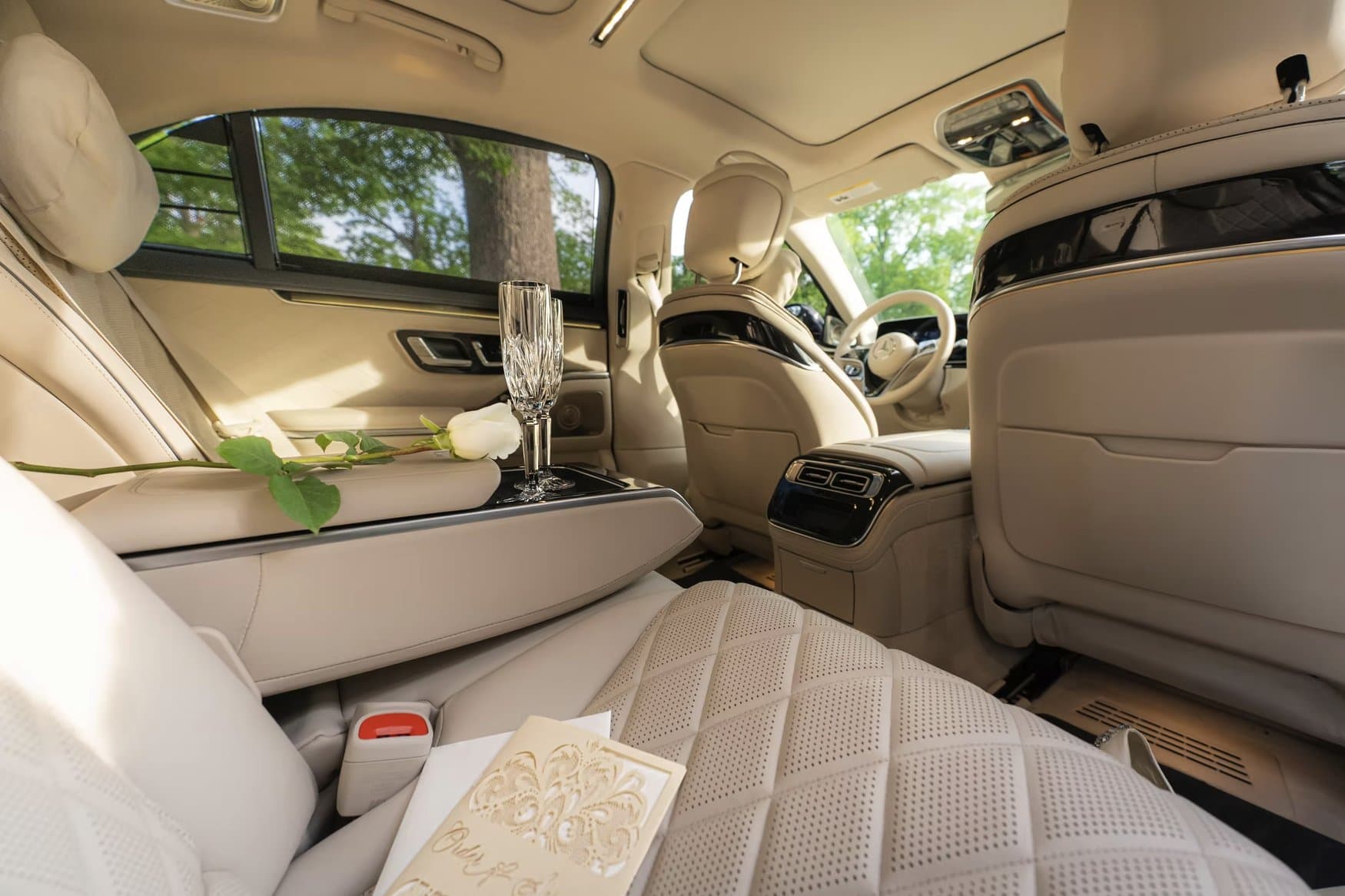
If your ceremony is at the Cathedral and the reception is in Alexandria, you are looking at a minimum thirty-five-minute drive without traffic. Add time for the bridal party to regroup, and you should block two full hours between the ceremony's end and the start of cocktail hour. This is also the moment a thoughtfully prepared cabin earns its keep: a chilled bottle, a single rose, the air already set to the right temperature.
“Couples assume the gap needs twenty minutes. It needs ninety. The difference is the difference between a memory and a scramble.”
Drive times you cannot argue with
Mapping software shows you the optimistic case. A wedding runs on the realistic case. Below are honest Saturday-afternoon drive times between common DC-area pairings: the figures we actually plan around rather than the ones the phone promises.
Add a 30-minute buffer to every leg involving the bride. Cherry blossom season (late March to mid-April) and event-driven road closures can double these figures without warning.
The departure: a detail that deserves attention
The exit is the final impression. A vehicle idling at the wrong entrance, or worse one that has not yet arrived, transforms a carefully planned evening into an awkward lobby wait under the eyes of departing guests. A professional chauffeur service coordinates departure timing with the event coordinator, positions the vehicle ten minutes before the planned exit, and sets the interior to the couple's preferences before the doors ever open.
For a destination hotel or a post-reception airport transfer, add thirty minutes of buffer. Late-night DC traffic is lighter, but post-event delays are common, and no one wants to discover at 11:00 PM that the luggage is still in a hotel room. The couple's bags should already be in the trunk, loaded during the reception through coordination between the chauffeur and the hotel concierge.
Your wedding-day transportation checklist
If you remember nothing else from this guide, remember these. They are the points that separate a wedding day that runs itself from one you spend managing.
A practical rule of thumb
For a Washington, DC area wedding with separate ceremony and reception venues, book your transportation for a minimum of six hours. Eight hours provides genuine peace of mind and accommodates the portrait session, the transit gaps, and the unhurried departure the day deserves.
When couples tell us they only need three hours, we always ask the same question: which part of your wedding day would you like to feel rushed? The honest answer is none of it, and a properly built timeline is how you make sure of it. When you are ready, our wedding team will build yours with you, leg by leg, and reserve the vehicle that fits the day.